


Simon Holmes à Court is no stranger to tackling complex issues as a driving force behind Australia’s first community owned-wind farm.
He is one of Australia’s most prominent philanthropists and cleantech investors and built it all upon a Bachelor of Arts at university.
He has worked as a software engineer, a renewable energy developer and has built solutions for agricultural efficiency.
He also founded Climate 200 in the lead up to the 2019 election which is a crowd funded initiative that has brought together 33,000 donors to support pro-climate action independent candidates in Australian elections.
He says his Arts education set him up for success.
“I absolutely benefitted from the roundness of education that came through my arts degree to know how to write, to understand the basics of how people and groups of people make decisions, to be able to research and to live with uncertainty and change,” he said.
“Studying arts and social science puts you in a good stead to navigate the rapidly changing world.”
Simon’s journey began with a Bachelor of Arts at the University of Western Australia.
He took a break from studies soon after transferring to a law degree and returned to study arts at Dartmouth College in the United States where he completed a Bachelor of Arts (BA) degree in three years.
Under the Liberal Arts model at Dartmouth, Simon enjoyed the variety of learning available to him as compared to high school.
Having the opportunity to study broadly across different fields before specialising opened new worlds of possibility.
“At Dartmouth, everyone has to take a language, for instance,” he said.
“You have to take laboratory science, a theoretical science, a non-western culture course and a performance or creative arts unit. I took a class called the history of jazz.
“It’s funny, here I am, nearly 30 years later, and it has been one of the classes that has stuck with me the most.
“That ability of Arts to open up intellectual worlds I hadn’t yet encountered, was perhaps the thing I valued most of all.”
In the winter of 1995, he took a class called the Technology of Cyberspace which was the very first time Dartmouth had run a class on the rapidly emerging internet.
“Our assignment was to build a website for a company which didn’t have one. Very few did back then. I built a website for Nike. It’s fun to think that somewhere on a floppy disk I have Nike’s first website,” he said.
“As well as the technical side, we talked a lot about how we thought the internet would impact society from the utopian to dystopian extremes. It was fascinating to get a jump on the major trend at that very early stage.”
Simon ended up completing his degree with a double major in Cognitive Science and Computer Science which was a critical combination at the time with the rapid growth of the internet and computer technologies.
It was the breadth and broadness of his degree which gave Simon an edge and made him very employable at a critical time as Silicon Valley’s dot com period was booming in the late 1990s.
“If I hadn’t studied Arts and done a vanilla computer science degree I would have looked like a lot of other people heading to Silicon Valley.
“Arts graduates have a depth and a roundness of learning that helps them stand apart.”
After working in Silicon Valley for five years, Simon returned to Australia in 2001 where has continued to be at the cutting edge of new industries.
For the last 15 years Simon has been at the forefront of the energy transition as a solution to climate change.
He says that “responding to climate change is one of the biggest multidisciplinary challenges humanity has ever encountered.”
His work has sat at the complex intersection of strategy, engineering, community engagement, politics and media.
“With climate change, the science is decades ahead of the general public,” he said.
“The engineering is also ahead. We already have most of the solutions we need.
“We are not just waiting for scientists and engineers to come up with major breakthroughs to solve climate change.
“The challenges at this point are all societal. We need to move society from where we are now to where we need to go. A lot of that work takes the skills that you gain through a broad humanities education,” he said.
“It’s the human factors — politics, philosophy, economics, psychology and sociology of the energy transition that are the limiting factors.
“It takes a much broader skill set than just engineering and science.”
Not only has Simon’s education underpinned his career and passion to tackle one of the most complex global challenges, it has also inspired his family.
“I’ve got four kids who are all doing Arts as part of double degrees. My wife did arts as well. I guess we are an arts family,” he said.
“My son studied geographic information systems in Arts. He also did politics, philosophy and economics as his other degree. The geospatial work made him very employable. But when he got to his company, he found he had an advantage.
“Even though he started as the most junior person in the company, he ended up being pulled in to help with major reports because he could write and communicate well.
“Arts had taught him how to write and translate complex ideas.
“What I would say to students and parents is that the world is changing very fast and many of tomorrow’s careers don’t exist yet.
“The skills you get from an Arts degree or in the social sciences will set you up for a flexibility to adapt and be relevant.”
He says going broad is critical to preparing for uncertainty in a rapidly changing world and technological context. An Arts degree is one way to navigate uncertainty.
“The world has been changing at an ever-increasing pace since I left university.
“A degree that forced me to go broad, taught me how to research, how to learn and how to be flexible has positioned me much better than I had I just taken the shortest path to specialist career in the 1990s,” he said.
“There will be tens of thousands of jobs for people who can work at the intersection of AI, policy, ethics and philosophy. And you really need a Liberal Arts background to play a credible role in that domain.
“The world is not something you master at university and then go into the workforce. Rather you learn how to embrace the infinite possibilities of knowledge and the opportunity to be a lifelong learner.”
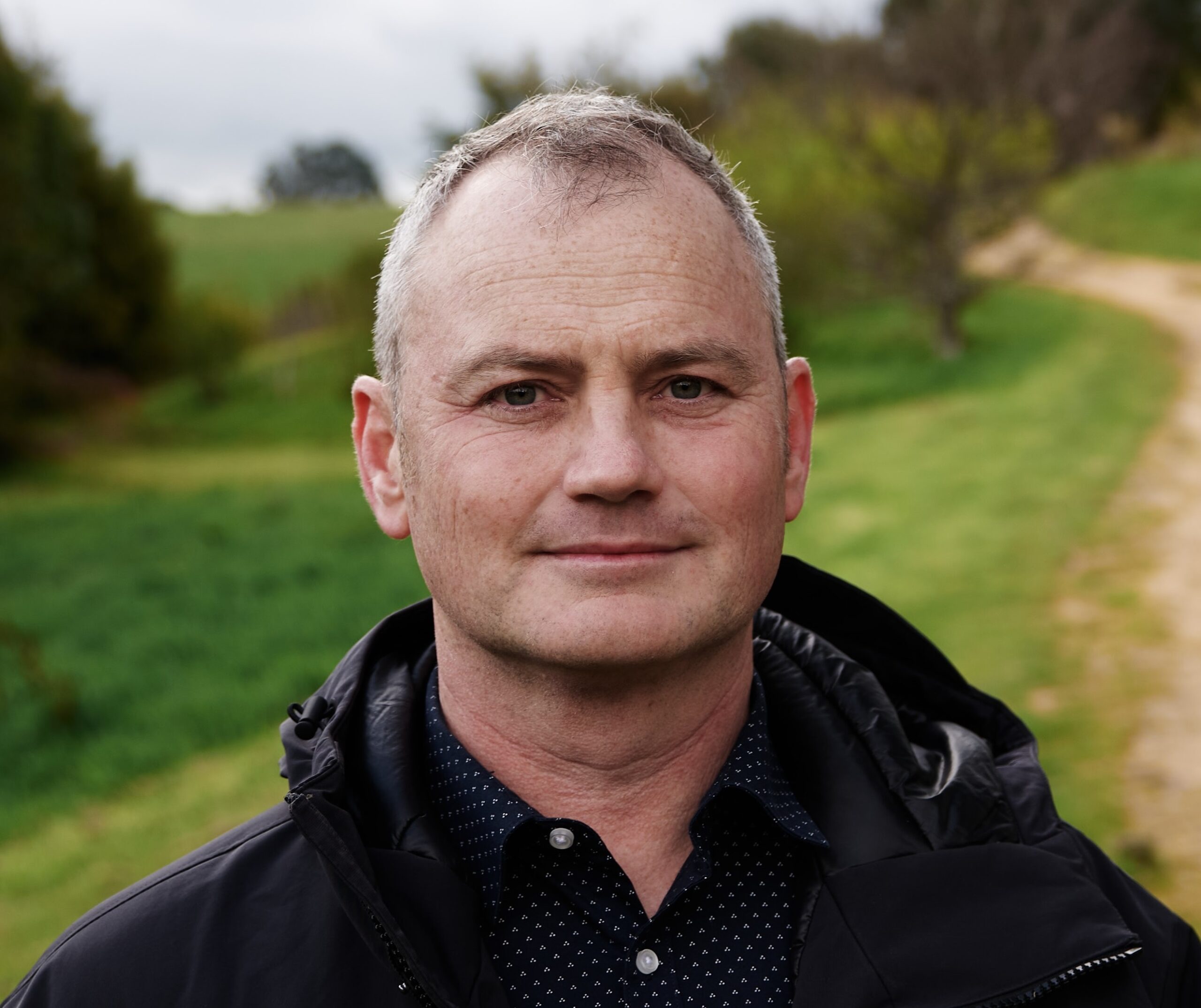
Simon Holmes à Court Bio
Simon is an energy analyst, clean tech investor and climate philanthropist. He is the founder of Climate 200, the community crowdfunding initiative that helped to elect seven new community independents to the Australian Parliament during the 2022 federal election.
Simon began his career as a software engineer in Silicon Valley during the first dotcom wave, then spent more than a decade in precision farm water management. He was a driving force behind the country’s first community-owned wind farm, Hepburn Wind, near Daylesford in Central Victoria. Simon is a director at the Australian Environmental Grantmakers Network, an advisor to the Smart Energy Council and writes regularly about the transformation of Australia’s energy sector.